
The UK SME landscape in 2026 is undergoing one of its most significant structural shifts in recent years. Changes to employment laws, National Insurance (NI), and wage regulations are not happening in isolation. They are converging, creating a compounded financial and operational impact for businesses.
For SME owners and decision-makers, this is not just another regulatory update. It is a fundamental shift in how employment costs, compliance, and workforce planning must be managed going forward.
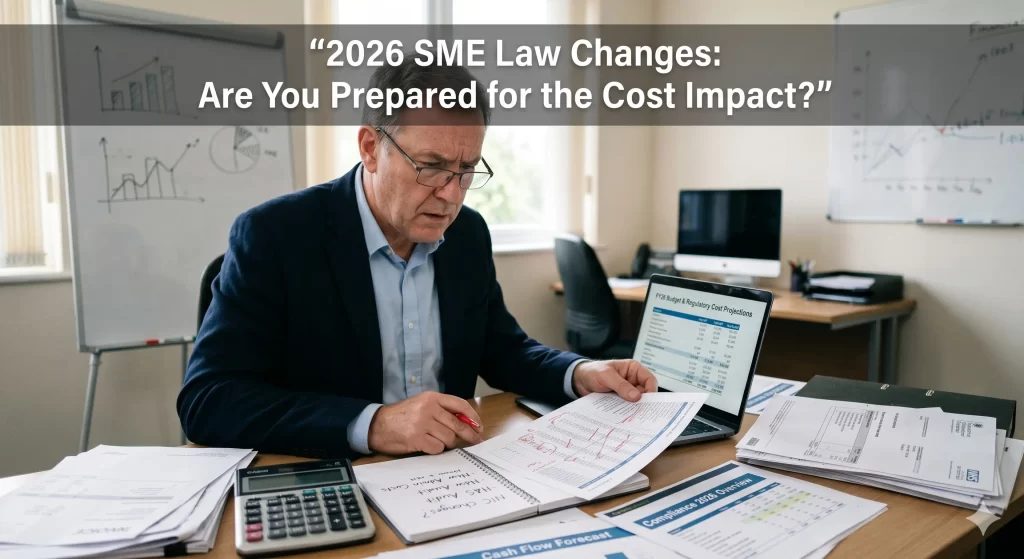
A New Reality for UK SMEs in 2026
Recent reforms, including the Employment Rights Act 2025 and updated taxation policies, have introduced new layers of responsibility for employers. These changes affect:
- Payroll costs
- Workforce management
- Compliance obligations
- Operational planning
For many SMEs, the challenge is not just understanding these updates but managing their combined impact effectively.
The National Insurance Shift: A Direct Cost Increase
One of the most immediate changes comes from Employer National Insurance Contributions.
Key Changes at a Glance
| Metric | Previous | 2026 Update | Impact |
| Employer NI Rate | 13.8% | 15% | Higher payroll cost |
| Secondary Threshold | £9,100 | £5,000 | Broader tax base |
| NI on £30k Salary | £2,884.20 | £3,750.00 | Increased employer cost |
This means businesses are now paying NI on a much larger portion of employee earnings.
For SMEs, this creates a direct increase in cost per employee, especially when scaled across teams.
Why This Matters for SME Growth
Lower thresholds and higher rates mean:
- Even part-time and lower-paid roles now carry NI liability
- Hiring flexibility is reduced
- Margins are under pressure
According to recent SME insights, employer taxes are widely seen as a major barrier to business growth .
The Role of Fiscal Drag
Another important factor is fiscal drag.
This occurs when:
- Wages increase
- Tax thresholds remain fixed
As a result:
- A larger portion of income becomes taxable
- Employer costs increase over time without new policy changes
This creates a long-term upward pressure on employment costs for SMEs.
The Fair Work Agency: A Shift in Enforcement
The introduction of the Fair Work Agency (FWA) marks a major change in how employment law is enforced.
What’s Changed
Previously:
- Compliance issues were often handled through employee claims
Now:
- The FWA can carry out proactive inspections
- Employers can be audited without complaints
This means:
- Greater emphasis on accurate record-keeping
- Increased risk of penalties for non-compliance
What This Means for SMEs
The new enforcement model increases the importance of:
- Proper payroll records
- Accurate holiday and sick pay calculations
- Clear HR documentation
Manual systems or fragmented tracking methods may no longer be sufficient under this level of scrutiny.
Statutory Sick Pay: Immediate Employer Responsibility
From April 2026, Statutory Sick Pay (SSP) has undergone significant changes.
Key Updates
- Sick pay now starts from day one of absence
- The lower earnings limit has been removed
- More workers are now eligible
This means:
- Even short-term absences create immediate cost
- More employees fall under SSP coverage
Increased Administrative Complexity
Employers must now calculate:
- A fixed SSP rate or
- A percentage of employee earnings
This introduces additional complexity, especially for:
- Part-time staff
- Variable working hours
Accurate calculations and documentation are now essential.
Rising Wage Costs and Their Ripple Effect
The National Living Wage has also increased in 2026, adding further pressure.
Wage Impact
| Category | 2026 Rate |
| National Living Wage (21+) | £12.71 |
| 18–20 Rate | £10.85 |
| 16–17 Rate | £8.00 |
These increases affect:
- Entry-level wages
- Overall payroll structure
The Challenge of Wage Compression
When minimum wages increase:
- Lower-level roles become more expensive
- Wage gaps between roles shrink
- Businesses often adjust higher-level salaries to maintain balance
This leads to a chain reaction across payroll costs.
Day-One Employment Rights
Another major shift is the expansion of employee rights from day one of employment.
These include:
- Parental leave
- Paternity leave
This changes how SMEs manage:
- Workforce planning
- Staff availability
- Operational continuity
The Bigger Picture: Combined Impact on SMEs
Individually, each change is manageable.
But together, they create:
- Higher employment costs
- Increased compliance requirements
- Reduced flexibility in hiring
Many SMEs are already feeling the pressure, with confidence levels reflecting a challenging outlook.
Adapting to the 2026 SME Landscape
To navigate this environment, SMEs need to focus on:
1. Structured HR Processes
Moving away from manual tracking towards organised systems
2. Accurate Payroll Management
Ensuring all calculations and records meet compliance standards
3. Proactive Workforce Planning
Understanding the full cost of hiring before making decisions
4. Efficient Operational Support
Reducing internal workload through structured processes
Supporting Your SME Through Change
As SMEs adapt to rising employment costs and stricter compliance requirements, the focus is shifting towards more structured and efficient operations across the business.
While HR and payroll processes are a key part of compliance, the pressure extends beyond just administrative functions. Many UK SMEs are also facing increasing costs and hiring challenges across technical and operational roles.
For example:
- Hiring software developers, DevOps engineers, and quality engineers locally is becoming more expensive due to wage increases and employer contributions
- Roles such as business analysts and data analysts are essential for decision-making but add further cost pressure
- In financial services, positions like mortgage administrators require accuracy and compliance, adding to operational complexity
In this environment, businesses are not just rethinking HR processes , they are rethinking how entire teams are built and managed.
By choosing to recruit offshore professionals as part of a dedicated team, SMEs can maintain operational continuity while managing rising employment costs more effectively.
This approach allows businesses to:
- Build skilled teams aligned with their workflows
- Maintain control over processes and output
- Reduce internal workload without compromising quality
While compliance responsibility remains with the business, having structured support across roles , from administrative to technical. Helps ensure that operations remain efficient, organised, and scalable under increasing regulatory pressure.
Conclusion
The 2026 employment law and taxation updates represent a major shift for UK SMEs.
From increased National Insurance contributions to expanded employee rights and stricter enforcement, the cost and complexity of managing a workforce have grown significantly.
Understanding these changes is the first step.
Adapting operations to handle them efficiently is what will define business resilience moving forward.